

The Cave Invitation: Why Being Alone With God Is the Key to Growing Up in Faith
Updated: Jul 8
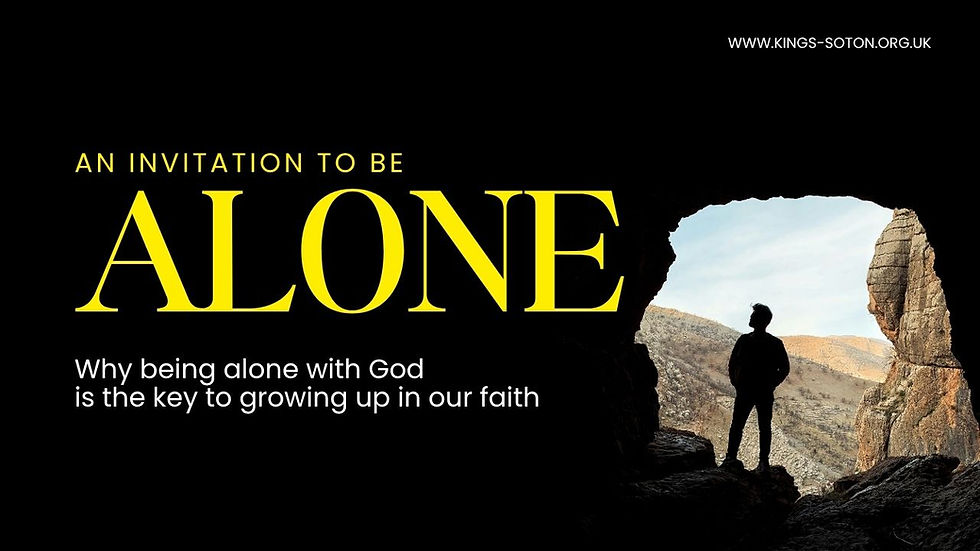
What if the silent moments in life that we try to avoid are moments that God uses in our own personal growth? We might fill every gap with noise, notifications, and distraction because solitude can feel uncomfortable — even threatening. But what if the discomfort of silence is exactly where spiritual growth happens? We recently heard Nathan talk from 1 Kings 19, considering God invitation for each of us to step into 'the cave of solitude' — to grow up emotionally as well as spiritually.
What Can We Learn From Elijah's Breakdown?

Elijah was not an ordinary person. He confronted kings, called down fire from heaven, and witnessed some of the most breathtaking miracles in the Old Testament. And yet, just after his greatest victory, we find him under a bush in the wilderness, suicidal, utterly spent, saying, 'I've had enough!', 1 Kings 19:4.
Burnout can happen - even if people have been really successful. Elijah's collapse reminds us that spiritual highs don't immunise us from emotional lows. After running from the death threat from Queen Jezebel, he eventually ends up at Mount Horeb — which we might be more familiar under it's other name: Mount Sinai — and he retreats into a cave. Not as a failure, but as someone being tenderly led by God into a place of stillness and honesty.
When God asks Elijah 'What are you doing here?', I think this is Elijah's invitation to be deeply honest. To notice, identify and speak out what's really going on inside.
Why Do We Avoid Silence?
I felt uncomfortable when I realised that I'm pretty effective at avoiding solitude. Perhaps that is true for many of us. We reach for our phones, put on a podcast, read a book, turn up the music, or lose ourselves in busyness. If or when pain surfaces, we might respond in one of three ways:
- Deny it — 'This isn't a problem. I'm fine.'
- Detach from it — 'I'll just not think about it.'
- Distract from it — Scrolling, snacking, staying busy, numbing the pain by taking a painkiller — anything to avoid sitting still and sitting with our pain.
The Simpsons (in my humble opinion) sometimes offer a window into our own behaviours. You might enjoy this snippet (taken from Season 1, Episode 6, 'Moaning Lisa').
These coping mechanisms aren't villainous responses. They're human ones. But they're also immature ones — and they keep us stuck because we never actually deal with the pain we might experience if we actually listened to it.
What Does the Iceberg Have to Do With Your Faith?
Pastor and author Pete Scazzero uses the image of an iceberg to describe our inner life. The part above the water is our visible, public self — people see us at church or life group, they get a feel for how well we might know the Bible. This outer, obeservable life is far less than the whole picture of our real life. Beneath the water surface lies the greater part of who we are: our inner thoughts, motivations and our posture or attitude to things. There are also our wounds, disappointments, unprocessed pain, and even our hidden fears.
“It’s impossible to be spiritually mature, while remaining emotionally immature” Pete Scazzero, Emotionally Healthy Spirituality
Scazzero argues — and this is new to me — that true discipleship must integrate our emotional health with our spiritual life. We can't simply keep polishing what's above the water whilst ignoring the two-thirds beneath. These submerged parts of us inevitably influence what is expressed above.
Solitude is one of the most powerful ways to begin doing that processing work. When we sit in silence before God, things surface. Rather than reaching for a distraction, we can process those things with God — honestly, openly, just as Elijah did in the cave (and in the 40 day walk leading up to it).
How Do You Actually Begin Practising Solitude?
Practicing solitude does not mean that we all need to go and live as hermits.
Let him who cannot be alone beware of community. He will only do harm to himself and to the community. But the reverse is also true: let him who is not in community beware of being alone. Dietrich Bonhoeffer, Life Together
This quote was written whilst Bonhoeffer was leading an underground church which was prohibited by the Nazi regime in the late 1930s, wisely pointing out that we need both community and solitude — neither extreme is healthy. I wonder if for most of us, the balance has tipped too far away from stillness.
Here are some simple ways to begin:
- Start small.
Five minutes of genuine quiet is a beginning. Put your phone out of reach. Sit. Be still.
- Acknowledge God's presence.
Simply say: 'God, you are here. I'm here to meet with you.'
- Notice the things that surface in your thoughts.
Don't fight the thoughts. Write them down if it helps.
- Be honest.
Tell God how you actually feel — there might be joy, there might be pain or confusion, memories of elation or things that hurt. A third of the Psalms are lament. We are in good company expressing and processing our troubled moments with God.
- Ask Him for wisdom.
Once you've named what's there, invite God to speak into it.
Life Application This Week

God's invitation is simple: Come away with Me. This week, why not respond? Why not try solitude with God, or extend your experience of it? On Sunday Nathan shared his recent experience of this direct and personal invitation from God. 'Cave-time' is a crucial part of our ongoing spiritual growth as we seek to grow up emotionally, as well as spiritually.
The cave isn't a place of defeat, or denial. For Elijah, it was the place where God showed up in a new and unexpected way. I encourage you to opt in - it might just be the same for you.
